Go to Rezona Lab



It's day three, the crows are faster than ever, and you're one pumpkin away from your best score when a crow slips through. A box pops up offering one more try for 350 Rezo Coins, which is about 50 cents. You tap yes, and that tap is how creators make money making games on Rezona.
You build a game by describing it to an AI game agent, add paid items such as continues and skins, and publish it to the Rezona app, where players can buy them with coins or tip you. There's no code involved at any point, from the first idea to the shop.
Start building in Rezona Lab or get the Rezona app.
How creators earn money on Rezona
Rezona Lab's Game Purchase skill adds paid items to a game, from skins and extra lives to continues and bonus levels. They go live once the game is published to Rezona, and players pay for them with Rezo Coins, which sell for about 700 to the US dollar. Players can also tip the creators whose games they like.
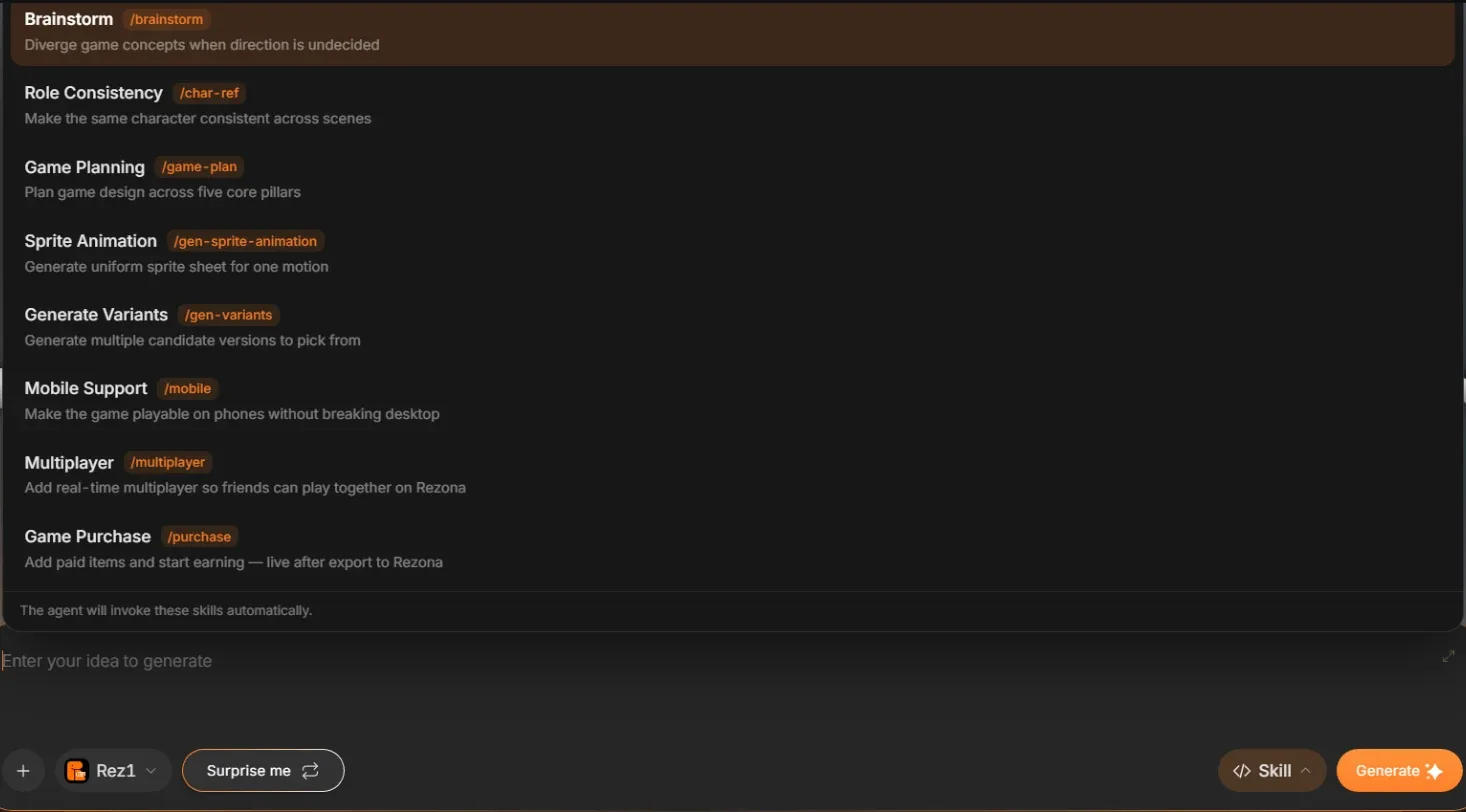
Rezona says creators have earned more than $1,000,000 on the platform so far. Publishing goes straight to the Rezona app, with no store submission and no review queue, so a small game can be in front of players the day you finish it.
That matters for small games in particular. A thirty-second game rarely justifies its own app store listing, marketing budget and review process, and on Rezona it doesn't need any of them.
Small games, real money
Small doesn't mean small-time. In 2025, China's mini games, the kind that open inside another app in a second with nothing to install, generated RMB 53.5 billion. That was 34% more than the year before and 15% of all games revenue in the country, according to the China Game Industry Report 2025.
Games like these are easy to open and just as easy to put down. They earn when people keep opening them, which is why the most important decision comes long before you add a shop.
Designing a game people pay to keep playing
Imagine a game about a farmer defending a pumpkin patch from crows. Players tap the crows to scare them off, and each day the crows get faster.
It's a decent start, but nothing in it yet makes a player want a second round, let alone pay for one. Rezona's Game Planning skill can help here. It plans the design across five core pillars before the agent builds anything, so gaps like this show up early.
The gap is usually progress. Add a score to beat, a combo for scaring three crows in quick succession, and new farms that unlock as players survive longer. Once players are unlocking things, you can sell those same things to anyone who'd rather not wait.

Keep each round short, ideally a minute or two, so starting another never feels like a commitment. Someone who loses forty seconds in and can try again instantly is far more likely to keep going, and far more likely to see your shop, than someone facing a long level from the start.
If you have a theme but no game yet, the Brainstorm skill will suggest several directions. Ask for a few before you commit, since the best idea is rarely the first one.
Adding in-game purchases
When the game is fun on its own, add the shop. Ask the agent to use Game Purchase and describe what you want:
Example prompt
Add a shop on the game-over screen with a golden scarecrow skin, a one-time continue and a bonus moonlit farm.The game-over screen is a natural spot, because that's when players most want another go. Cosmetics such as skins and outfits often do well, as do unlocks and second chances offered right after a close loss. A cheap starter bundle, shown once and early, can turn a player into a buyer.
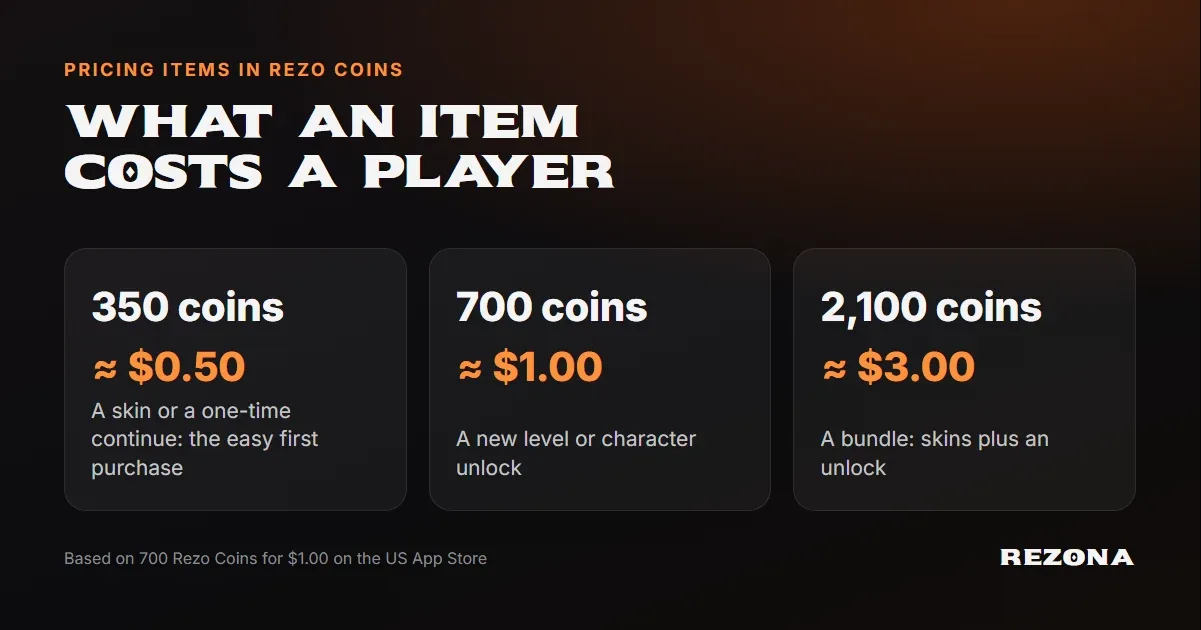
Prices are easier to judge in dollars. At about 700 coins to the dollar, 350 coins is around 50 cents, 700 is about a dollar and 2,100 is about three. Launching with a few low-priced items and watching what sells is safer than opening with a full store.
Keep every purchase optional. Players who never spend anything are often the ones who share the game with their friends, so they need to enjoy it as much as anyone.
Building and testing the game
You build the game in Rezona Lab's Game Studio by describing it and pressing Generate. Within minutes it's playable in the preview, and from there most of the work is playing it and giving the agent notes:
Example prompt
The crows are too fast on day one.Example prompt
Put the combo counter in the middle of the screen.The version history lets you compare builds, so a note that doesn't work out is easy to undo. A good test is whether you'd happily play five rounds in a row yourself. If you wouldn't, nobody is going to open the shop.
Looks matter, because people pay to dress up characters they like. Generate Variants gives you several versions to pick from, Role Consistency keeps your farmer the same on every screen, and Sprite Animation produces a sprite sheet for a single motion, such as a run cycle.
Test on a phone before you publish, since that's where most players will meet your game. If the controls feel cramped under a thumb, ask the agent for the Mobile Support skill.
Keeping players around after launch
Tap Share to Rezona and the game is live in the app. Comments will tell you what's too hard or what's missing, and remixes show which parts of your idea other creators liked enough to build on.
Updates keep a game alive. A new farm, a new enemy or a seasonal skin gives past players a reason to return and something new to buy. If the game would be better with a friend, the Multiplayer skill adds real-time play on Rezona.
It's worth answering comments, too, especially early on. Someone who took the time to say the second farm is too hard is telling you exactly where players give up, and a quick fix that they can see you made is a good way to keep them playing.
Where games lose buyers
Most games that never earn don't fail at the shop. They fail before players get anywhere near it.
The most common problem is selling power. If paying makes the game easier in a way free players can feel, the free players leave, and they stop recommending it. Sell things that make the game more fun or more personal, not things that make it unfair.
Placement matters almost as much. A shop buried three menus deep earns far less than an offer that appears at the moment a player wants it, which is usually right after they lose. Skipping the phone test is another quiet killer, because if the controls fight a player's thumb, they'll never reach the game-over screen at all.
Finally, be careful with other people's work. Rezona's terms of service don't allow copyrighted images, music or video without permission, or trademarked characters and logos used in unauthorized or misleading ways. A game built on someone else's characters can be taken down, and its earnings go with it.
Selling on Steam or Google Play
Rezona Lab can export a finished game as a Steam package, a Google Play bundle, an Android APK or a ZIP. Selling those versions needs commercial rights. Starter includes personal commercial use, and Creator and Max include a full commercial license, each covering what you generate while subscribed; Rezona's pricing page compares the plans.
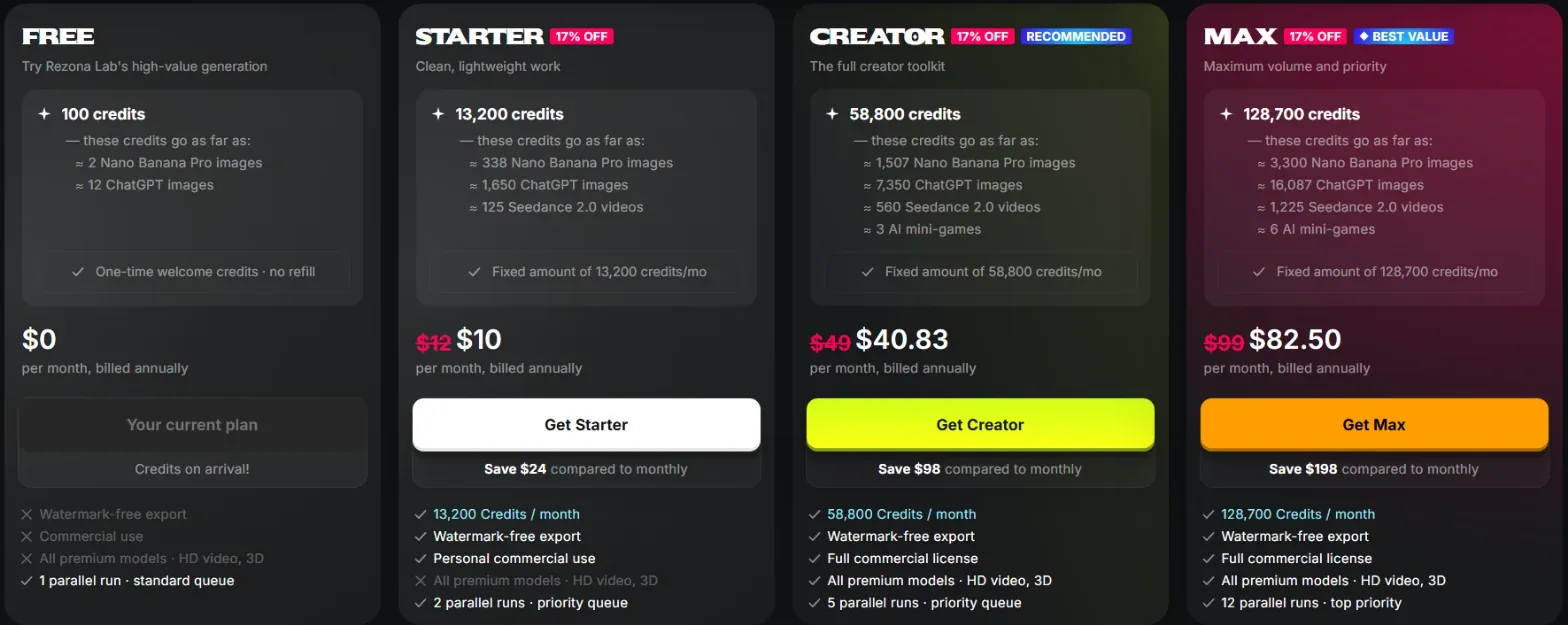
The stores charge their own fees. Steam asks $100 per game, which it pays back once the game earns $1,000 in adjusted gross revenue (Steam Direct). Google Play has a one-time $25 registration fee for developers (Play Console Help) and takes a service fee on sales (Google Play service fees).
How much can a small game earn?
Anywhere from nothing to a real income. It depends on how many people play, how many of them buy something, and how often they return.
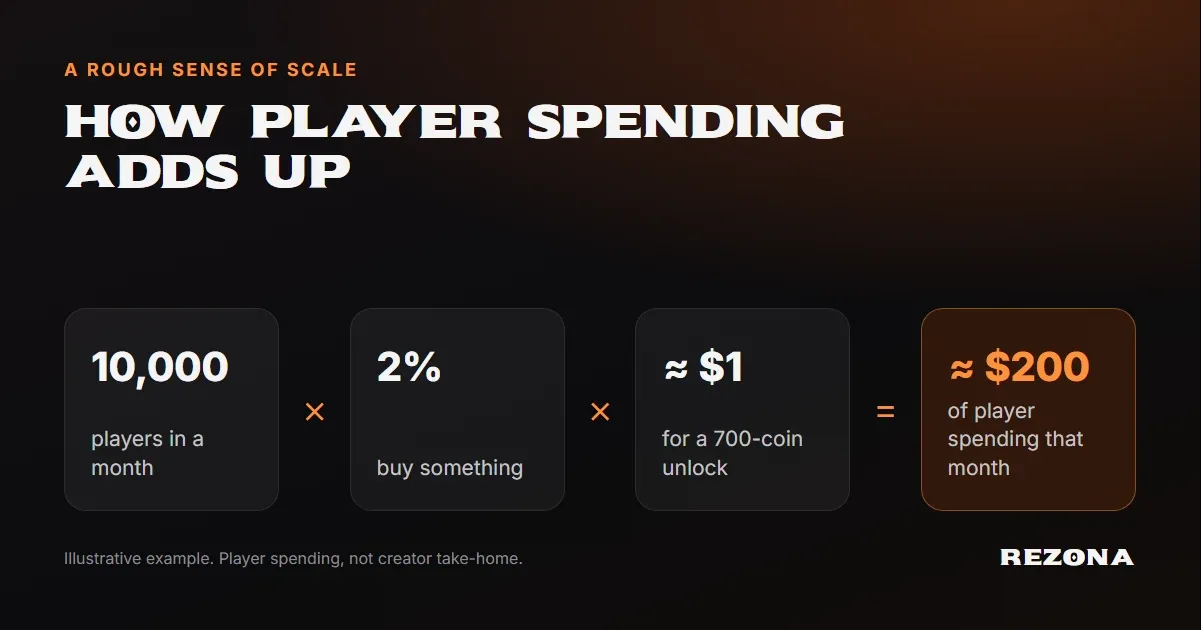
For a sense of scale, picture 10,000 players in a month, with 2% of them buying a 700-coin unlock. That's about $200 of player spending. More players help, but the bigger lever is giving each one a reason to come back and something new to buy when they do.
Do you need to code to make money from a game?
No. Everything above, from the shop to multiplayer, is done by describing what you want to the game agent, and it writes the code.
Where to start
Pick an idea you'd happily play twenty times, and build the smallest version of it. Your first game in Rezona Lab is free, and our meme game maker guide is full of ideas.